

Leash Tension as a Cue: Teaching Dogs to Check In
Most dog owners think of leash tension as a problem to solve—a sign that their dog is pulling, lunging, or getting away from them. But what if that tension could become a powerful communication tool instead? By reframing leash tension as a training cue rather than something to correct, you can teach your dog to self-regulate and check in with you, even in challenging situations.
This approach is particularly valuable for reactive dogs who need to maintain focus on their handler while navigating triggers during walks, or even excited puppies!
Understanding Leash Tension as Communication
When your dog creates tension on the leash by moving away from you, it's an opportunity—not a failure. Instead of yanking back or using that tension negatively, you can use it as a signal that teaches your dog something valuable: "When you move away and create tension, you should come back and reduce that tension."
The beauty of this method is that it turns the dog's own behavior into the teacher. Rather than you controlling the dog through the leash, the dog learns to control themselves by managing the leash.
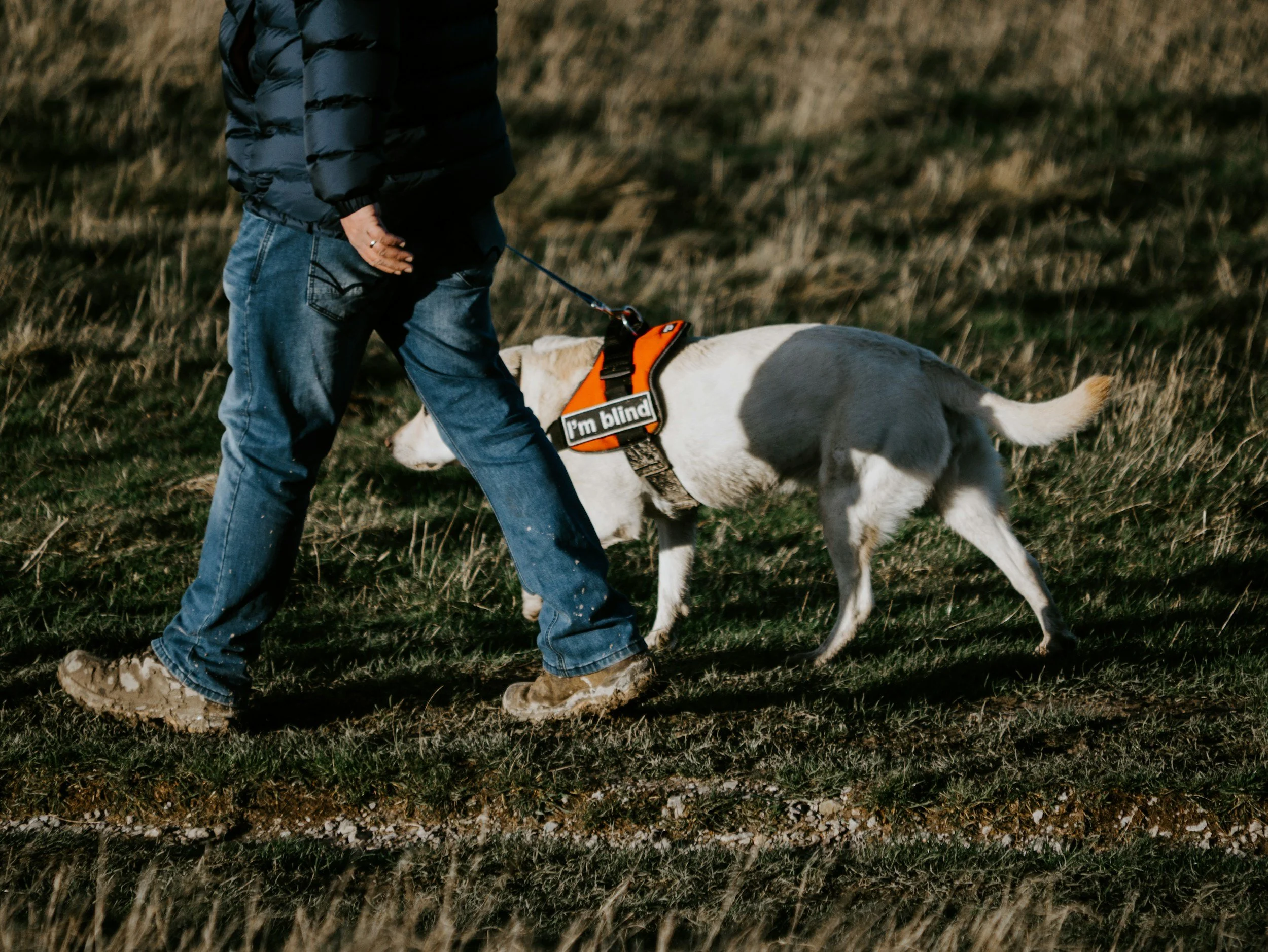
How to Implement Leash Tension Training
Step 1: Set Up the Scenario
Start in a relatively neutral environment where your dog will naturally create some leash tension—perhaps while walking past something mildly interesting but not overly stimulating. The goal is to work at a level where your dog can succeed. Consider just starting in your back yard or living room! We always suggest walking your dog in a harness to keep pressure off their neck.
Step 2: Mark the Reduction in Tension
When your dog creates tension on the leash, simply plant yourself/freeze (don't pull back). The moment your dog reduces that tension—even slightly—mark it immediately with a marker word like "yes!" or a clicker.
This marking is critical. It tells your dog exactly what behavior earned the reward.
Step 3: Reward the Check-In
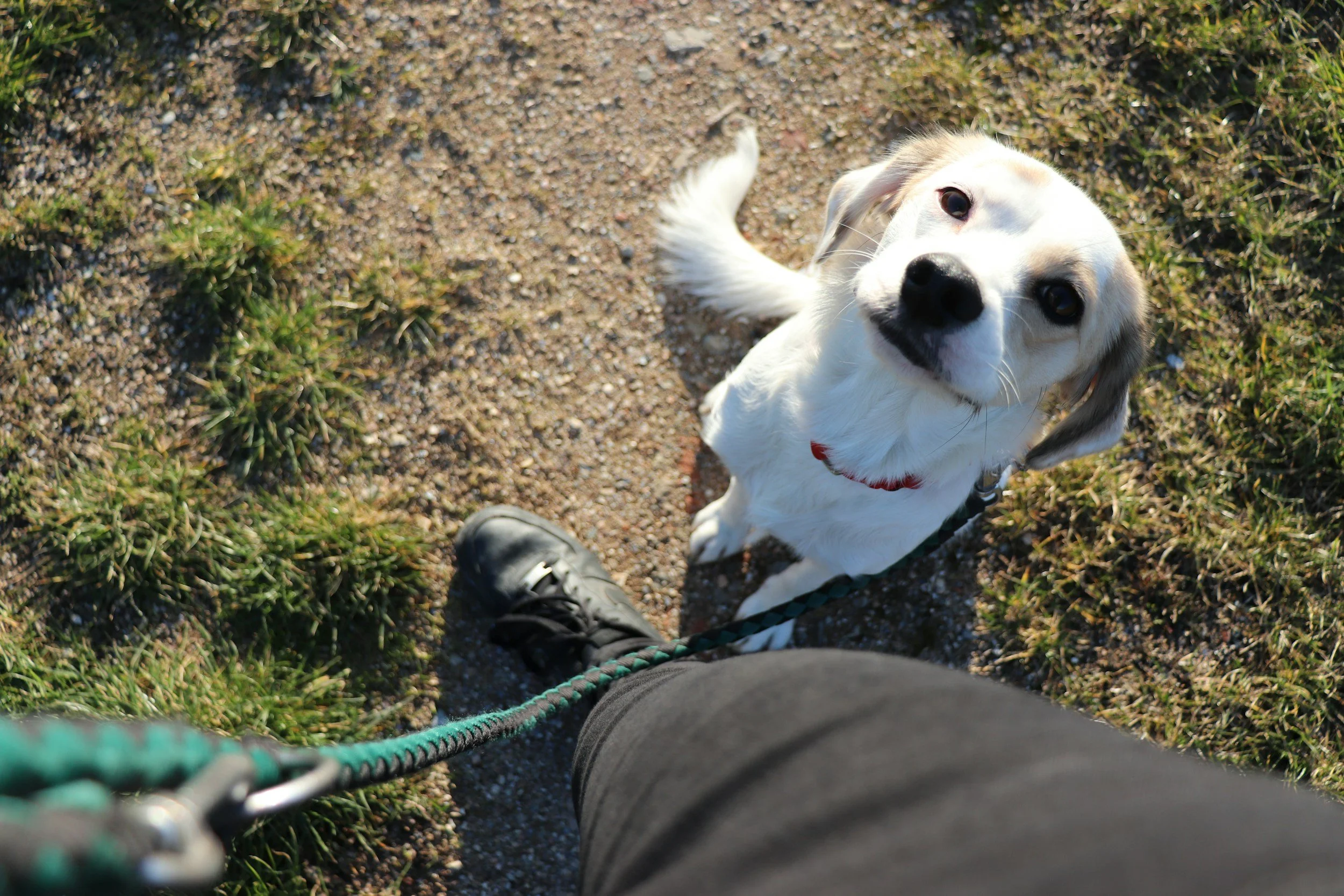
Immediately after marking, deliver a reward at your side. Your dog will naturally turn back toward you to get the treat, which further reinforces the behavior of checking in and reducing leash tension. It also reinforces the position of being at your side.
Step 4: Build the Pattern
Repeat this process consistently during your walks or practice walks. Over time, your dog begins to understand: "When I feel tension building and I move away, I should come back to my handler. That's what gets me rewards."
Why This Works for Reactive Dogs
Reactive dogs often struggle with impulse control and maintaining focus on their handler when triggers appear. By establishing leash tension as a cue to check in, you create a self-reinforcing feedback loop:
Dog feels tension → Dog reduces tension by checking in → Dog gets rewarded → Behavior strengthens
This is especially powerful because the dog is actively problem-solving rather than being forced into compliance. The dog learns that the solution to the discomfort of tension is to return focus to you. You may notice that your leash stays slack more often as they will want to be closer to your side where rewards are delivered on walks as well!
Real-World Application During Walks
Imagine you're walking your reactive dog past a trigger—maybe another dog across the street or a pedestrian approaching. Your dog starts to move away, creating leash tension. Instead of correcting:
Plant yourself and wait for the tension to reduce
Mark immediately when your dog takes even a small step back toward you
Reward generously to reinforce the behavior
Consider moving in a different direction to reduce the trigger now!
Over time, your dog learns that when they encounter something that makes them want to lunge or pull, the best strategy is to check back in with you. This is far more effective than any correction, because your dog is making the choice and getting rewarded.
Combining Leash Tension Training with Other Techniques
This method works beautifully alongside other reactive dog training strategies:
Pattern games: Use the "up/down" game after your dog has checked in to help them further regulate their arousal
Treat rewards for eye contact: When your dog looks at you during triggers, reward that focus to build the checking-in behavior even stronger
Reward a slack leash: when your dog maintains a slack leash for a period, mark and reward that to let them know they’re doing a great job!
Common Mistakes to Avoid
Don't pull back on the leash. The point is to let the dog's own movement create the tension, and then reward them for reducing it. If you pull, you become part of the tension rather than the solution. Keep your body relaxed as well!
Don't mark too late. The marker needs to come the instant the tension reduces, or your dog won't make the connection between the behavior and the reward.
Don't expect perfection immediately. This is a skill that builds over time. Some dogs catch on within a few walks; others need weeks of consistent practice. That's normal.
The Bigger Picture
Teaching your dog that leash tension is a cue to check in transforms how your dog thinks about walks. Instead of fighting against the leash or becoming frustrated with corrections, your dog develops agency and problem-solving skills. They learn that they have the power to make good things happen by managing their own behavior.
For reactive dogs, this is transformative. It shifts the relationship from "handler controls dog" to "dog and handler work together." And that collaborative mindset is exactly what you need when navigating the challenges of reactivity.
Ready to try this with your own dog? Start in a low-distraction environment, be patient with the process, and remember: every small reduction in tension is worth marking and rewarding. Your dog will catch on faster than you might expect.
If you want help with your reactive dog, or just want to enjoy walking your dog more, reach out to us for help!
